Tokyo: From digital Art to Mount Fuji's Flower Fields.

May 30, 2026
Tokyo—I’m freaking out. Huge crowds, everything’s blinking and flashing, and anime and cosplay madness is screaming at me.
Wait a minute. Not true at all.
When I arrive in Japan after a 14-hour flight, crossing the North Pole, I’m completely wiped out because a toddler in the row behind me has been screaming on and off all night. Every 15 minutes over and over again. The entire plane was totally amused. Not. So much for “screaming at me.” Compared to this the noise level on the main street next to the subway in downtown Tokyo is nothing. There are tons of quiet electric cars, various building facades covered in vertical greenery, and no one is yelling, honking, or spitting on the ground. My first evening after the long flight is accordingly relaxed. I stroll through a serene side street and grab a slice of pizza to go, which I have wrapped in paper while it’s still warm—which is why later the entire topping sticks firmly to the paper and I end up eating “Margherita” against my will. Oh well. There are worse things. Like the night on the plane. It’s mid-April, the cherry blossoms are gone, and I’m spending a week and a half alone in Japan before my husband joins me from the U.S. He just has a quick surgery to insert a metal plate in his broken leg and will catch up with me afterward. Canceling the trip isn’t an option. That’s him.
During these one and a half weeks, I actually find the garishly colorful plastic world I was afraid of—though early in the morning, when the party is over. I walk through a room filled with water and a hall full of floating orchids, discover a forest temple in the heart of the city, stumble upon accidental azaleas, and ride a rental bike around the base of Mount Fuji. Come along to a Tokyo that’s surprisingly different from what you might imagine.
The morning after the Nightlife - a photo walk through Shinjuku
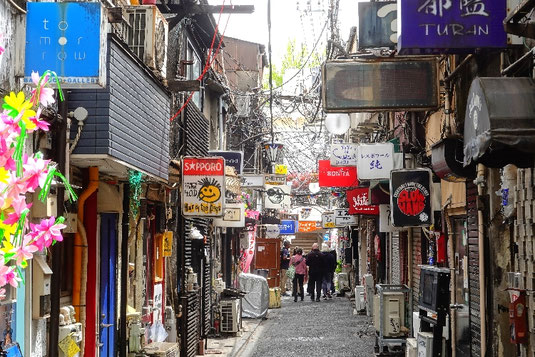
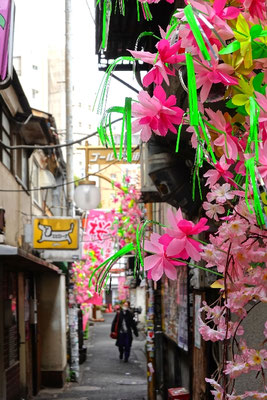
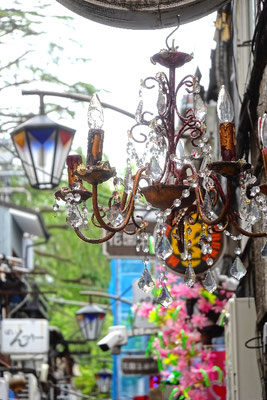
Of course, Tokyo has those spots where everything flashes and blinks, and where thousands of people cross the famous crosswalks at Shibuya Crossing all at once (which, by the way, happens in a more polite and orderly fashion in Japan than ordering a sandwich at the deli counter in Germany on a Monday morning). Of course, Tokyo has nightlife, bars, and parties. Anyone who knows me knows I’m about as keen on that as I am on skin rash. Still, I take the subway and head to the Golden Gai in Shinjuku, where things really get going after sunset. Except it’s seven in the morning. The silence after the party. Always a very special atmosphere—especially for someone who loves photography. The Golden Gai is a tiny maze of even tinier alleys, crammed with super-tiny restaurants that sometimes have only five to ten seats and where food is grilled and cooked right in front of the guests. You can imagine the spicy smells, the heat, and the boozy conversations. When I arrive, it’s broad daylight, quiet, and most bars are closed or just closing up. Above me dangles a chandelier made of fake rhinestones, next to it a piece of graffiti, and in the window below, a jumbled collection of statues. Planters, wine glasses, crooked lanterns, and artificial flowers complete this unique and alternative neighborhood. A place to stroll and take it all in. I’m having fun.
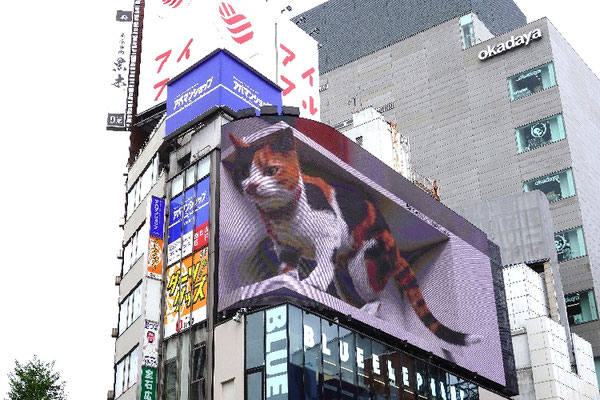
A little later, I find myself on Shinjuku’s main street, with its huge digital billboards where pop bands are blaring out songs and cartoon characters are advertising the most annoying crap. I mentally tune out the nonsense and set out in search of the Shinjuku Cat—a three-dimensional-looking projection of a… well, a cat, basically. I find it, and I’m actually thrilled by how real it seems as it hops around the corner of the building. After this explosion of color and plastic, I’m ready for something green. And surprisingly, it’s not far away at all.
Tokyo's magic Forest - the Meiji Shrine and gnarly Trees
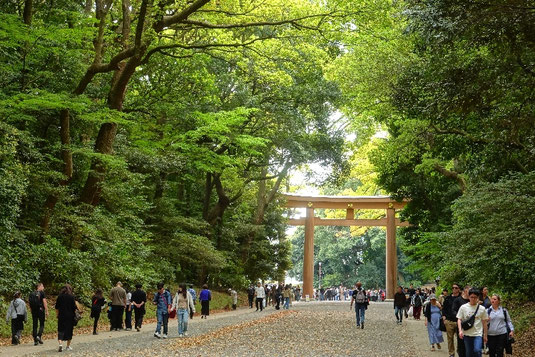
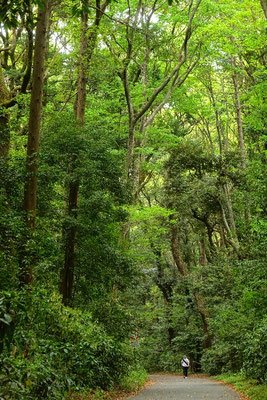
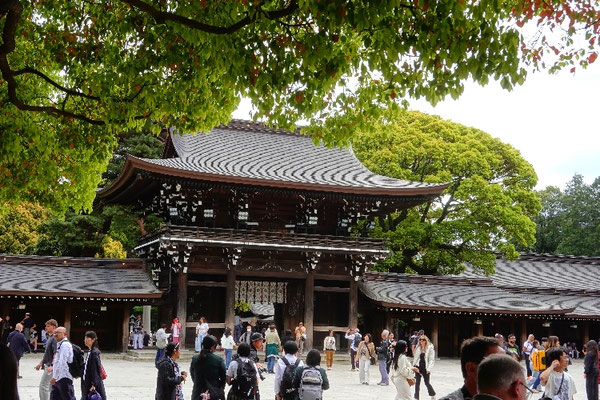
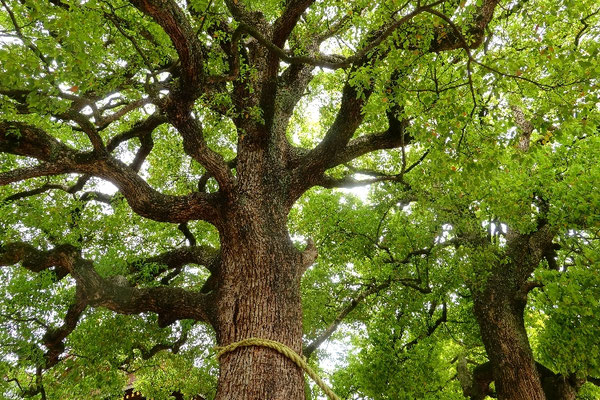
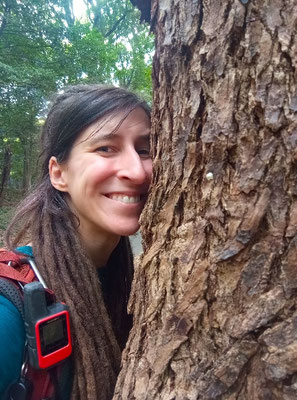
You know that green rectangle in the middle of bustling New York, right? Central Park. Tokyo has something like that, too. Only more spiritual and with lots of forest. The Meiji Shrine invites you through a massive torii gate made of solid wood into a garden that makes you completely forget you’re in one of the world’s largest metropolises. Wide paths wind past gnarled trees with broad canopies. You immediately feel like one of the Seven Dwarfs. Silence envelops me, leaves rustle, and it’s as if I’ve stepped into a secret backyard that completely blocks out skyscrapers, streets, and cars. The 173 acre site in the Shibuya district was laid out between 1915 and 1920. At the time, 100,000 volunteers planted over 120,000 trees, including 365 different native species. The goal of the initiative was to create an animal-friendly, long-term stable, and sustainable forest without considering profit or the timber industry. In the center of the grounds: the beautiful Meiji Shrine with a large inner courtyard and two imposing, closely standing trees known as “Husband and Wife.” In 2013, a study showed that over the decades, 3,000 living creatures, including rare birds and insects, have settled in the forest. Isn’t it wonderful when visions actually come true and no complete idiot shows up in a tank, driven by hatred, to egotistically destroy everything just because he can?
I wander along the forest paths all afternoon, sit by the shrine, enjoy the sun and the intricate architecture, and take a deep breath. The only thing I don’t see are any squirrels. Speaking of which: Did you know that this country has Japanese flying squirrels (cuteness factor: off the charts) and Japanese giant flying squirrels (which look like flying raccoons)?
Accidental Azaleas - crashing a Flower Festival in Tokyo
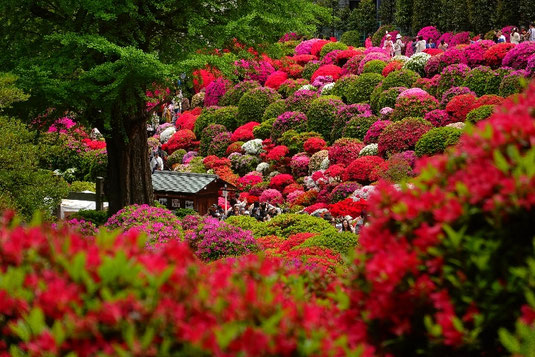
I was actually hoping to also find a little peace and quiet a few days later at Nezu Shrine. But then: hullabaloo. Food trucks, balloons, long lines of people. I
was just about to make a run for it when a nice, older Japanese gentleman in uniform waved me over and directed me into the line. I’m a nice person, too—and too nice to shout,
“Help, I want to get out of here!”
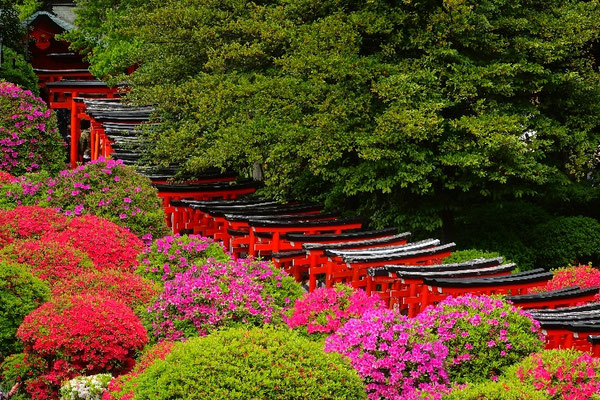
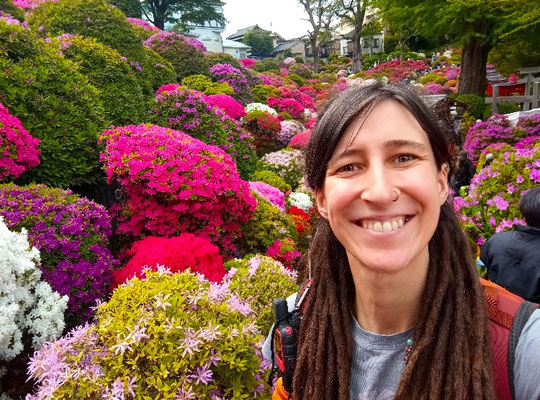
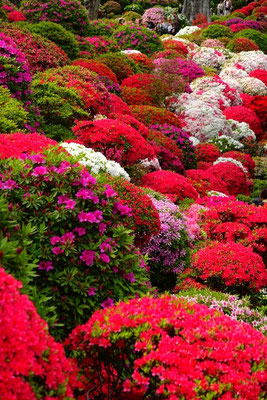
Shortly after, I’m glad I didn’t leave. Because I accidentally stumbled upon the big azalea festival, and the slopes of the shrine are piled high with bright pink, white, red,
and purple azaleas, as if someone had dumped colorful marbles there. Although it’s quite crowded, the people are so quiet and polite that it’s not unpleasant at all. Something I
have also noticed in restaurants in Scandinavia. It’s not always the number of people, but how they behave and interact with one another. In Germany, unfortunately, people are
constantly complaining and acting grumpily without any manners or respect. It’s a shame, really. Can’t we do better?
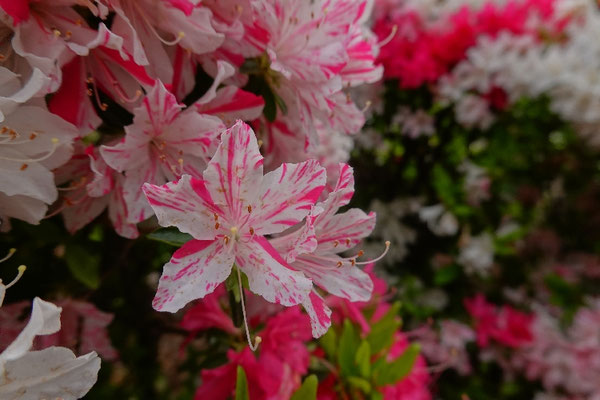
The blossoms glow and look like a surging sea from a distance. In the middle of it all, a path of small, red torii gates rises up. Up close, I can see the many details of the
different blossoms. Some are thin and small, others full and bushy. Japan is an absolute hotspot when it comes to flower festivals. Even though I much prefer wildflowers to arranged ones, this place touches me. A big Thank You goes out to the nice, older Japanese
gentleman in uniform!
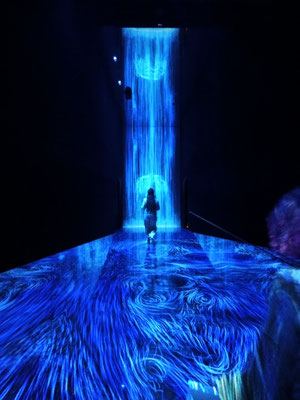
TeamLab Tokyo – a Museum for your wildest imagination
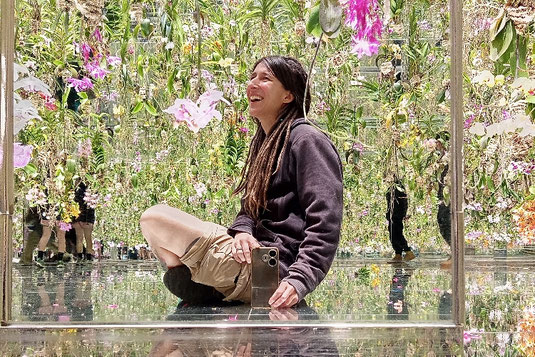
As you may know, I’m more of a wild child. Virtual worlds aren’t really my thing. But my best friend,
with whom I visited Japan for the first time in 2017, recently sent me some incredibly artistic, surreal photos from TeamLab Tokyo—an immersive exhibition where you walk through
fantasy worlds. A room filled with water, a hall of mirrors, and a space with real, hanging orchids. I had to check it out. Since the museum is popular, you should order tickets at least
two to four weeks in advance. Which is exactly what I did. “Oh, I’ll be done and out in two hours,” I thought to myself.
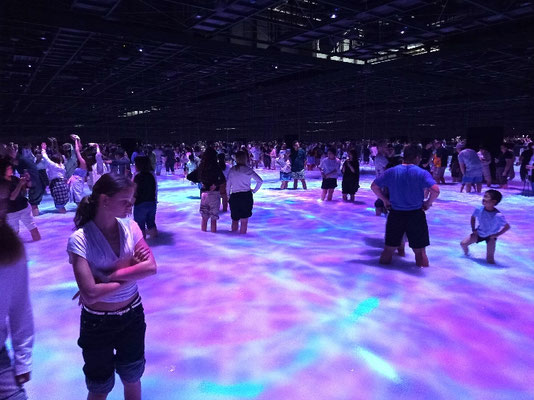
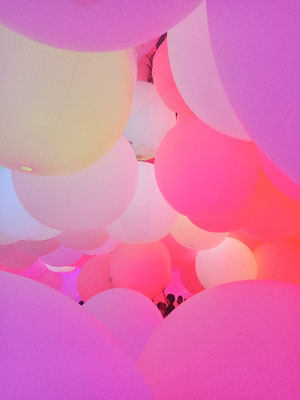
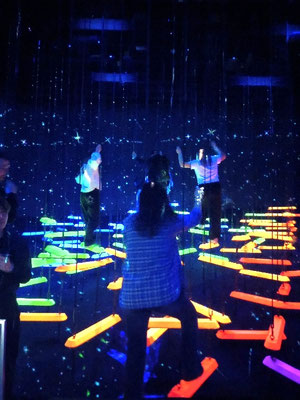
Five hours later, I emerge from the exhibition full of wonder—really tired but totally enchanted. I romped through a room full of giant balls, sat under a dome full of flower
petals, captured and released extinct animals, sat under a canopy of orchids that slowly descended upon me, waded knee-deep through lukewarm water with koi projections, drew an
airplane and then controlled it in 3D on a screen using my phone, and climbed over neon-lit, floating rods. Holy cow—if that wasn’t the realization of all my crazy childhood
dreams of “Wonderland” and “Paradise”! It was as if someone had looked inside my five-year-old brain and recreated all the amazing things I knew existed only in my imagination. I highly recommend
visiting TeamLab: they have several museums around the world.
With a rental Bike around Fuji to a Sea of Flowers
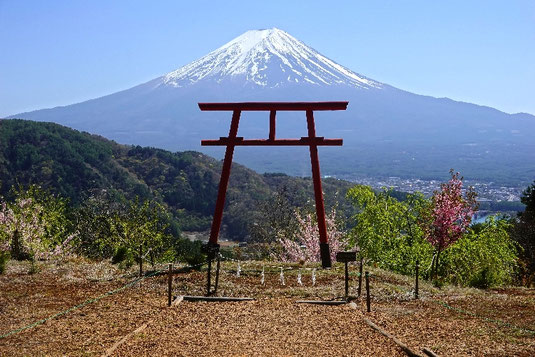
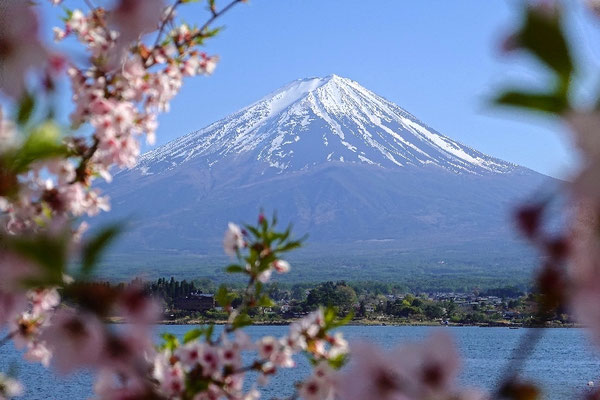
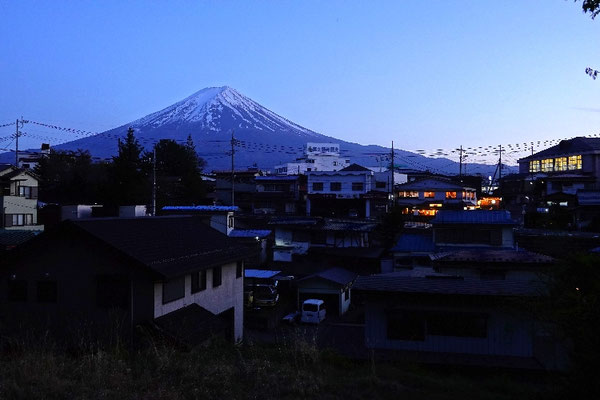
What else comes to mind when you think of Tokyo? Yes, Mount Fuji. One of the most striking mountains on Earth. However, it’s absurdly often in no mood to be seen. My best friend has already tried twice in two different years, and once it was ash, another time haze. An Instagram friend was there just a few days after me—rain. Not a single glimpse of Fuji. Just a white wall. As I ride the long-distance bus for two hours from Tokyo to the foot of Mount Fuji, the weather is perfect. I almost expect something to go wrong anyway, but suddenly there it is. Huge, mighty, like a blue triangle with white icing. I’d love to jump up during the ride and run to the window. But in Japan, you keep your cool.
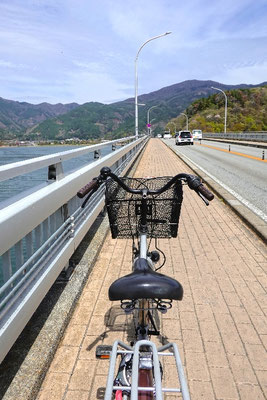
As soon as I arrive, I launch “Mission: Bike.” A rental car seemed too impractical to me, because there aren’t always parking spots where I want to see things. I wouldn’t have gotten far on foot, and the public bus is inflexible. Then I found a suggestion online to simply rent a bike. Simply.
JLuckily, there are tons of bike rental shops all around Mount Fuji. Using hand gestures and a bit of Janglish, I manage to rent a rickety ladies’ bike and a helmet, then push it sheepishly around the corner until the shop owner can’t see me anymore—I haven’t been on a bike in ages, they drive on the left here, and I can’t read most of the signs. I’ll probably crash right away. Then I shoot down a hill toward a lake, ride across an intersection with a potential red light, feel my heart racing a bit, and finally reach some insanely beautiful viewpoints.
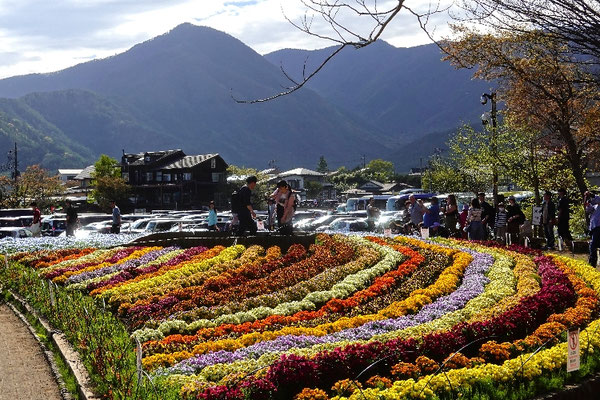
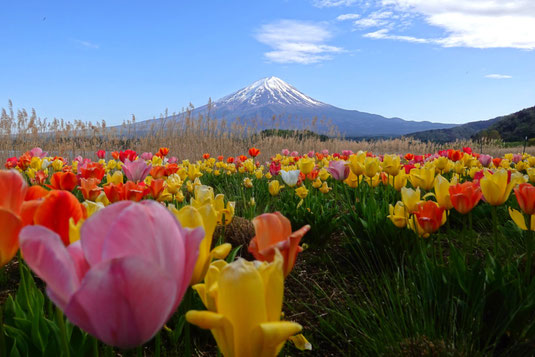
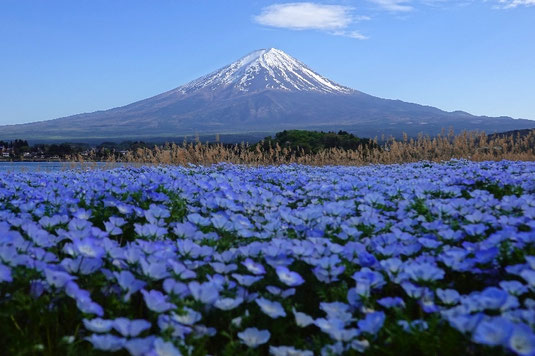
When I still have some time in the afternoon, I cycle along the lakeshore and just want to relax. I head toward a park that shows up on Google Maps. Probably just a few park benches and trees, I think. Yeah, right! There are flowers again. Tons of flowers. I’ve stumbled upon the next flower festival. Tulips, nemophiliae, pansies… from the ground, the flower beds look like they stretch for miles. I take ten million photos. A skill that almost makes me look like a local, because it’s unbelievable how many photos Japanese people snap every second. Everywhere, not just with flowers. Then I linger a bit longer and gaze at Mount Fuji, considered one of the holiest places in the country. In Shintoism, it is the seat of the gods. A significance that couldn’t be more fitting for such a unique, majestic mountain.
Tokyo – so much more than crowds, anime, and cosplay.
If you like, you can follow my stories and travel adventures daily on Instagram: @squirrel.sarah.
Find more stories from Japan and Asia here:
- Kyoto: Spirit Animals, Moss Temples, and 10.000 Torii
- Hiking in Japan: Wild Hokkaido - Snow Walls, Volcanoes and Phlox-Magic
- Thailand's Temples: Gold and Silver, Flames and Flags
- Kathmandu: Between colorful Temples, blue Smog and the Afterlife
- 3000 Steps, Jungle Heat and Stars above the Himalayas: Our Nepal Trekking Tour