
Flower Carpets and Snow Balls – Three days in Paradise with a Tent .

November 1, 2025
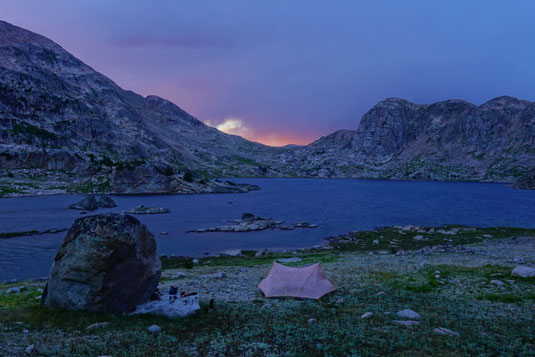
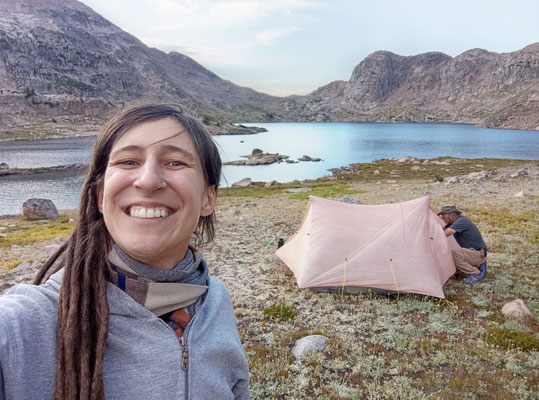
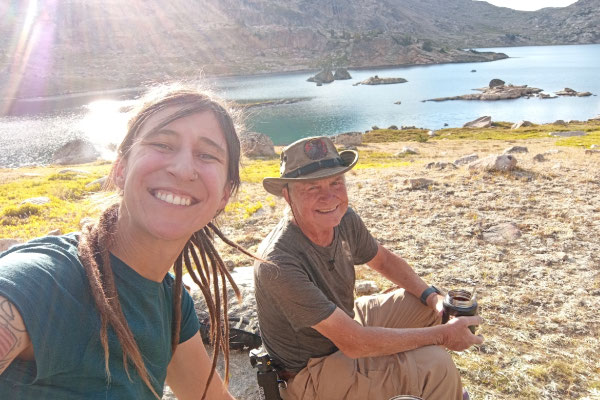
The smooth, blue-green lake lies in a rocky basin like a magical potion. Small white flowers struggle to bloom on the sparse, high alpine meadow on which I sit. Behind me, my husband rustles around in our small trekking tent. One of the tent pegs isn't put in perfectly yet. But it doesn't matter. Because there is so much perfection, so much beauty around us that I hardly dare move, fearing that it might all shatter into shards.
Here we are. In the wilderness of the Rocky Mountains above the tree line, where it's only warm enough and snow-free enough to hike for three months out of the year. Over 10000 feet high, no roads, no infrastructure, no electric lights, no buildings, no signal. The only thing that leads you here are your feet. The only shelter is the tent you carry. I had expected an exciting trek and a few lakes. But then we found ourselves headfirst in paradise. I don't say this lightly: this was one of the most beautiful treks in the world.
And that's precisely why I'm not going to say where exactly it is. Only a few locals come here occasionally to climb and fish. It's wild wilderness outside of national parks, campgrounds, and civilization. Public land that is available to everyone, similar to the "Allemannsretten" in Norway. Leave nothing but footprints, take nothing but photos is the guiding principle, which is actually well repsected out here. In paradise. Where carpets of flowers bloom, turquoise lakes glisten, a few remnants of snow lurk, and you are completely on your own. Wild.
Into the wild with Sat Phone and Bear Canister

“I want to go back into the wilderness one last time,” I say to my husband a few days before I leave the US and my summer here comes to an end.
He suggests Yellowstone. But I have a different idea. We've been to a beautiful remote mountain range recently. We
didn't see another soul on our 9-mile hike there, but we did see tons of wildflowers, lakes, woodpeckers, and even a black bear cub. And the best thing: this incredibly
vast, rugged area is designated as "public land," which means that trekking and camping with tents is allowed everywhere, as long as you break camp and move on
after a few days, and follow a few rules. My wild heart immediately starts racing: Wow, what would it be like to spend a whole summer out here and only returning to civilization now and then for
food!
But maybe we should start with a few days before I start thinking about selling everything, forgetting my address and name, and moving into the forest.
The trek we choose leads along a chain of small lakes and is only seven miles long in total. But this is not about miles, this is about the experience of being
out there in wild nature. Just being. And so we set off, loaded down with a tent, food for three days, a gas stove, a satellite phone, and a bear canister.
Huh—what's that? Well, these mountains are home to bears. Black bears and grizzlies. Anyone who has been following this blog for a while knows that you have to protect
your food from bears in the wilderness, otherwise you'll quickly become the bear's dessert. Normally, you hang your food on a rope in tall trees. But the end of the trek lies above the
tree line. That's why you can buy special, certified hard plastic boxes – called bear canisters – in outdoor stores in the area. They have a special twist lock that bears
can't open. You then place these boxes on the ground at least 100 yards away from your tent. The downside is that they're heavy and have limited space. But what can you do? It's
better than becoming bear's dessert.


Wildflowers like in Paradise
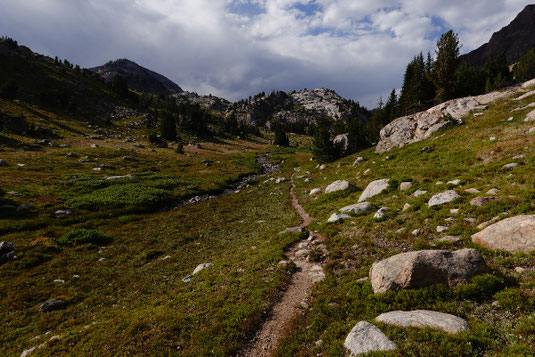
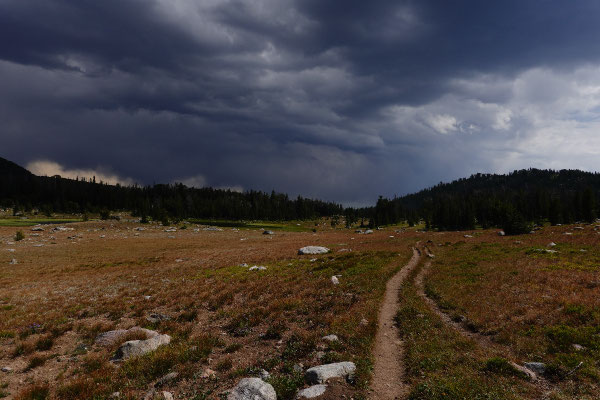
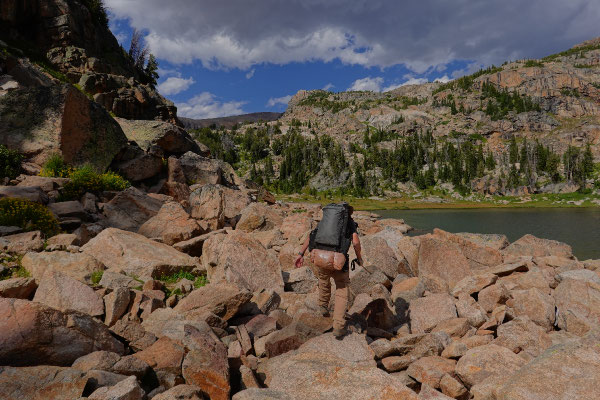
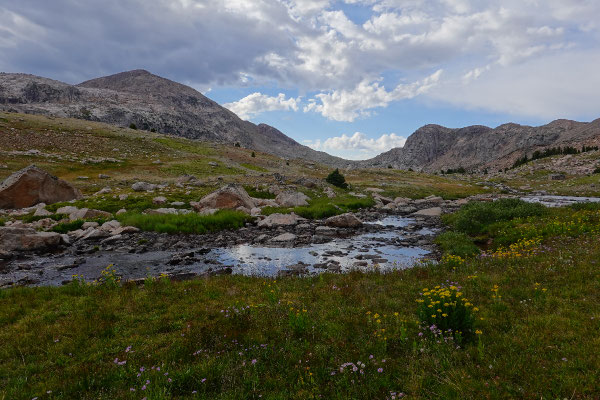
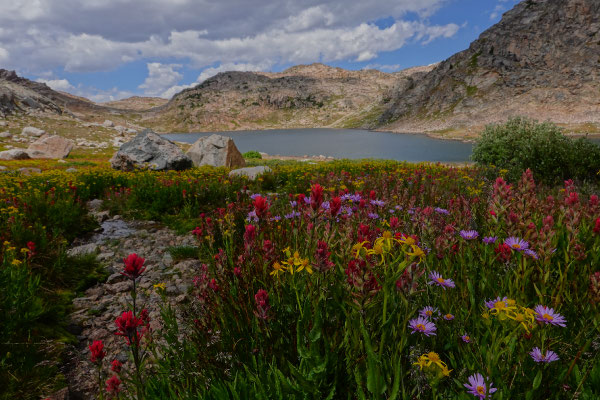
The first lakes are nestled in meadows. The sky is threateningly black at times, which makes the grass around us shine particularly golden in the sun. In fact, everything is full of color. The lakes are sometimes dark blue, almost violet, then light green and almost orange. The alpine meadows are interspersed with yellow leaves, the mountains are gray and sometimes reddish-brown with white snowfields on the peaks. It is August. And there is an incredible peace hovering over this landscape. No concrete, no chainsaws, no construction, and no noise. A corner of the earth that we humans have simply left alone, where we are just visitors who have to adapt to the circumstances and not the other way around.
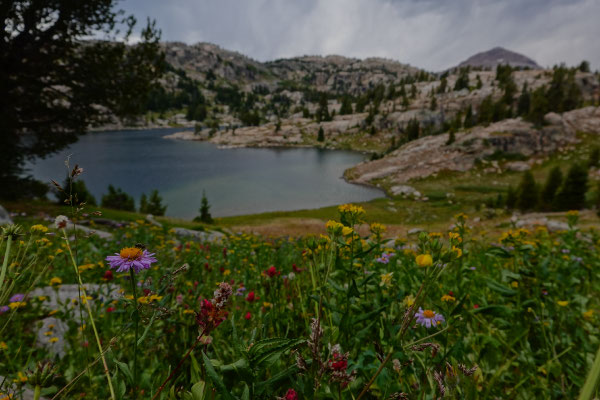
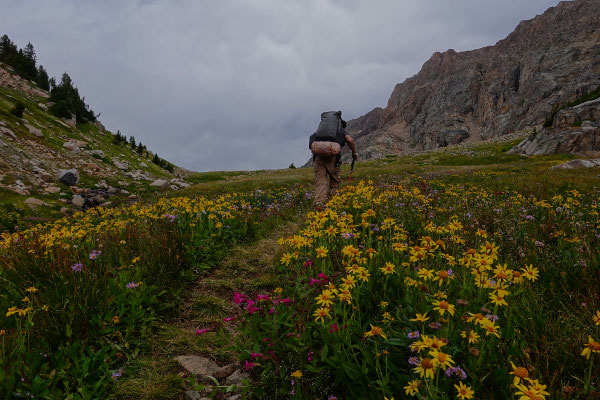
After a while, the narrow path climbs and leads over large boulders across a saddle and—wow! From above, we look down into the next valley, where a large, brightly colored area full of flowers slopes down to a long, blue-gray lake. When I imagined paradise as a child, it was always full of trees and flowers. Almost exactly like here. I almost forget to breathe. Then we hike high above the lake's shore, brushing against moss and the last fir trees before the trees thin out and only bare rock and high alpine meadows lie ahead of us. A river cascades from one lake into another. Butterflies flutter back and forth between the increasingly dense carpets of flowers. Purple asters, yellow arnica, red paintbrushes... they glow like little lanterns in a miniature wonderland.
Us and the Mountains
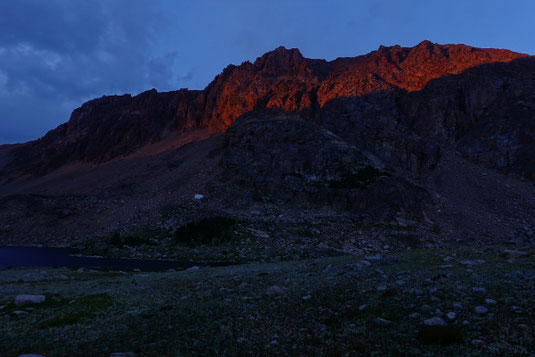
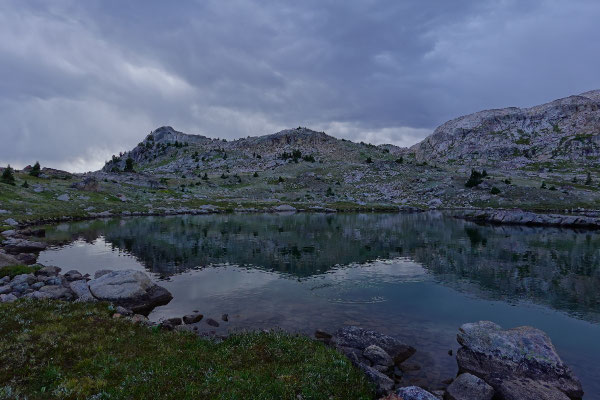
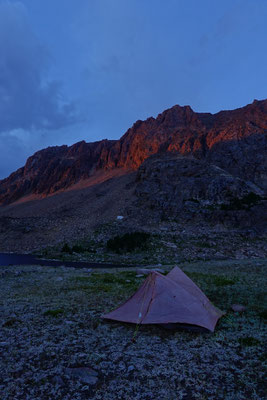
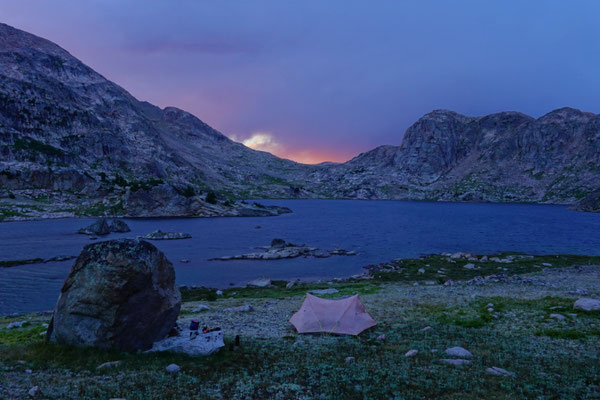
Then we reach a lake that seems to lie in a stone basin. The ground around it is fairly level. A good place to pitch a tent. So that's what we do. Then we take the water filter to the shore and collect our drinking and cooking water for the night. Then we just sit there. On a rock. It is completely silent except for a slight breeze. Slowly, it gets darker and darker. It's just us and the mountains. It's like meditation without meditating. I am completely at peace with myself and feel the night rising like a tide behind the horizon.
Suddenly, a pink streak glows above the mountain peaks and beneath the dark blue fluffy clouds. It's almost a little eerie. Through a tiny hole in the clouds, all the colors of sunset pour out with full force – and for a few minutes, the mountain edges glow in fiery orange. I've seen a lot, but never anything like this. It's as if it were daytime in the middle of the night. But only for a very brief, magical moment.
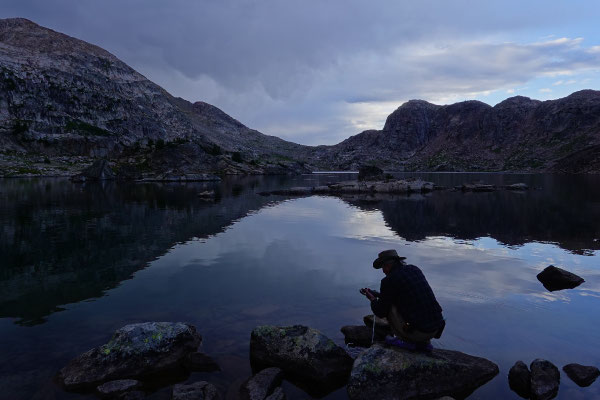
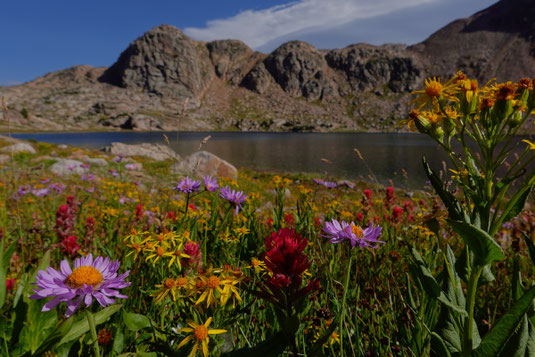
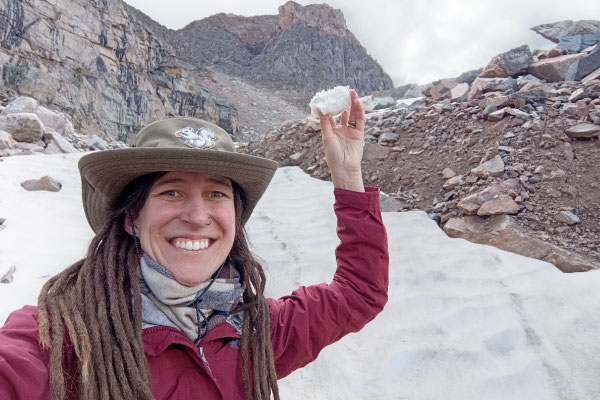
The next morning, we leave the tent behind and hike to the last two lakes on our the trek with light packs. How surreal this sea of flowers is up here among the bare rock. There's even some snow left in one spot. I gotta go and touch it! I'm just forming a snowball when I hear a rushing noise nearby. When I look up, I see a boulder the size of our trekking backpacks sliding over a melting snow edge and falling to the ground about ten feet below with a dull thud. Nervously, I drop the snowball and run away. Yikes. Not everything is quite so harmless here in paradise.
Then we sit down on a rock by the lake shore—far away from potential landslides—and my husband reads aloud from our current book. We often read together. He reads aloud and I
listen. I look up at the sky, where blue patches and dark clouds are having a battle. In between, it rains briefly. We are right in the middle of it. In the wilderness, far away
from everything and yet right where everything is: one of the most beautiful treks in the world.
If you like, you can follow our adventures, hikes, and experiences daily on Instagram: @squirrel.sarah.
Find more of our hiking and wilderness trips here:



Diane Green (Samstag, 01 November 2025 22:12)
Muy excelente!!!