From a River Hike to a Volcano Crater:
5 exciting Nature Experiences in Italy.

December 2, 2018 / Update: March 28, 2026

Tall and dark cypress trees loom outside the window like slim, tall tin soldiers. They seem to be watching me closely to see what I’m up to with that fancy wine list. Maybe I should first try to hold it right side up to not look like a total fool.
My best friend and I, in our mid-20s, are traveling Italy for a few weeks, and when we're on the road together it is always hilarious, chaotic and fun. We have just received a
voucher for a wine tasting at Brolio Castle in Tuscany that we can redeem down in the valley at a posh place with wood-paneled walls. The good news: We like wine. The bad news:
We don’t know anything about it. That’s why we embarrass ourselves big time right when ordering, mixing up all sorts of varieties and aromas.
Since the ladies behind the counter look even more stern and like tin soldiers than the trees, we hastily down the fancy swill and rush off.
The landscape of Tuscany is beautiful—certainly also without the haze of wine—and thus ranks among my five favorite nature experiences in Italy, alongside a volcano, an adventurous river trail, a picturesque coastline, and a jewel-laden island. Come with us and have a sometimes ironic but always honest look!
1. Tuscany
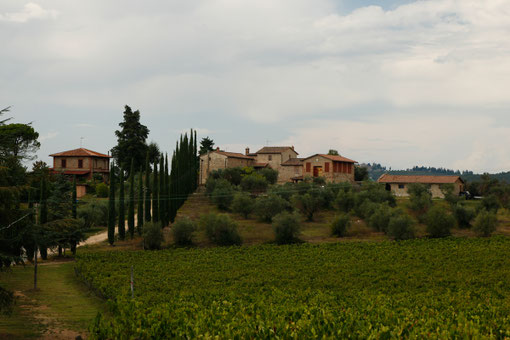
The best hidden secret ever—not. Almost everyone knows or has heard of Tuscany. Aren’t there those rolling hills, rows of cypress trees and ancient stone houses? Yes there are! But be aware that it’s hard to pin down a precise spot on the map, since Tuscany covers nearly 5,600,000 acres. Tuscany is not just an overlook you drive to, snap 250 photos, and drive away from. That’s why it’s absolutely worth renting a car for a few days and driving all over the countryside at your leasure. The picturesque Pinterest and Instagram photos you see online don’t lie: Little brown-stone estates with bright red-tiled roofs are scattered across the green and golden hills. Dark-green cypress-lined avenues lead up to the driveways; sometimes surrounded by vineyards. The roads are in relatively good shape and not too narrow. It’s often possible to drive as fast as 50 or 70 mph. Sure, Italiens happily speed up to about 100 mph, occaisonally honking frantically for no apparent reason. So keep your cool and just let them pass, wave and smile. Proper parking spots are a bit rare along the way, but the sides of the roads are usually not lined with guardrails, so you can simply pull over every now and then, stop, and enjoy the view.

By the way, there’s one thing that works particularly well in Tuscany: spending big bucks. A bottle of wine here, a night’s stay in a remote vacation home there, and then there’s gas for all the countryside driving. My tip: Don’t limit yourself to just one accomodation but expand your search to several larger cities, such as Livorno, Siena, Arezzo, or Grosseto, and you’ll probably find something affordable. Plus, apart from a few toll roads like the A12 between Grosseto and Livorno or the A1 between Florence and Arezzo, there are many toll-free country roads available. The good thing with the free, slower roads: you get to see more of the countryside. The catch: it takes longer. But then, who wants to rush through Tuscany anyway!
You can easily calculate how much in tolls your specific route will cost by using the ADAC Route Planner, and decide whether you’re on vacation or on the run.
Siena, Castle Brolio and Bagni San Filippo
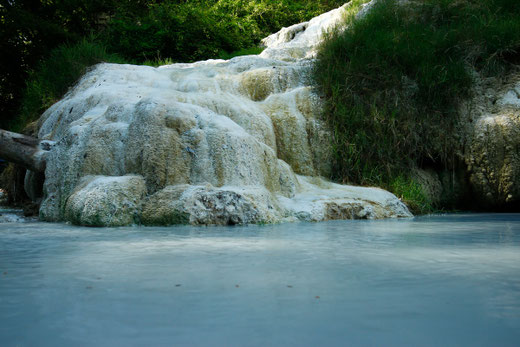
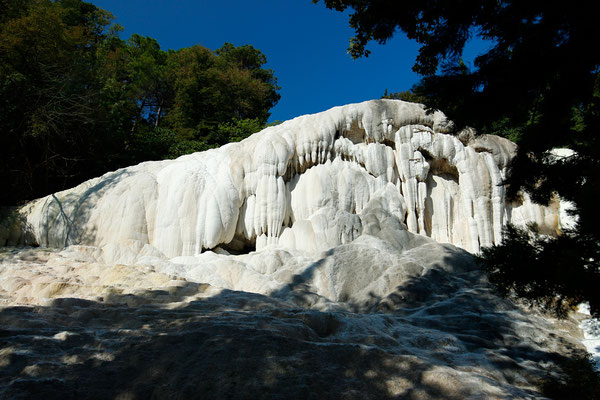
To wrap things up, in addition to Tuscany’s general charm, I’d like to recommend three places that particularly impressed me. First is the city of Siena. Its architecture is simply stunning, and the massive amphitheater-shaped market square seems to swallow you whole. You can easily spend at least a full day here, marveling at it all. Then there’s Brolio Castle, mentioned earlier, which is privately owned and not open to the public—but the view from the grounds is incredibly beautiful. And finally, you shouldn’t miss the hot springs of Bagni San Filippo. The limestone deposits pile up in the middle of a forest like white walruses. From there, a white river cascades down into a valley, looking like a stream of warm milk. I did, however, miss the honey and the roasted pigeons in the air. It is allowed to soak in the waters.
One last thing about Tuscany: If you get antsy quickly, you should plan for a maximum of two to three days in Tuscany, because even the most beautiful olive grove starts to look the same after a while. If you want to unwind and relax, five to seven days is a better bet.
2. Vesuvius
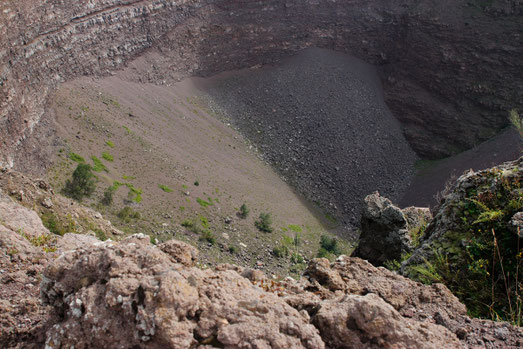
Have you ever danced along the rim of a volcanic crater? How awesome is that? Honestly, at first our trip to the volcano Vesuvius is not awesome at all, because we’re crammed into a packed bus and have a mysterious red sticker put on our jackets by a cashier, and no one’s telling us what it’s supposed to mean or what's going on. I’m about to glue the sticker onto my forehead—just to cheer up the grumpy-looking bus driver.
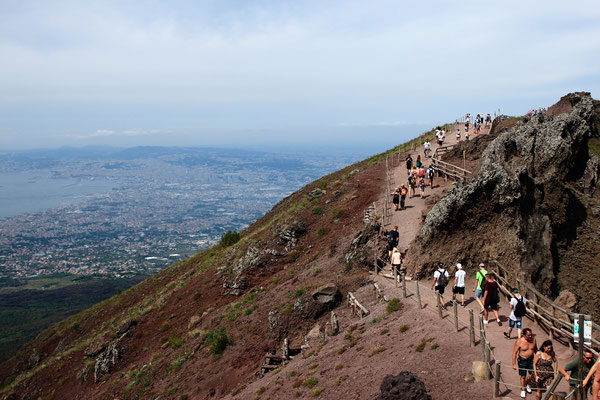
You can either drive to a hiking parking lot below the summit of Vesuvius, or take a shuttle bus (both require a fee) directly from the Ercolano Scavi train station to the final stop on the mountain (that's what we did to avoid driving a car in this traffic mess). You can reach the train station via the Circumvesuviana regional train, which stops in Naples, among other places. You’ll then have to walk up a dusty path for about half an hour to the crater rim, both from the hiking parking lot and from the bus stop. At the trailhead you’ll find a ticket booth where you can buy admission tickets for the crater. If you take the shuttle bus, you can purchase the tickets directly on the bus.

After the grumpy bus driver cranks up a bunch of terrible Italian schmaltzy songs to full volume, we start rumbling our way up the mountain. Once at the top, we set off right away. Well, sort of. My friend races off in a sudden outburst of anger as she has just received an upsetting text from a guy she is currently dating, and I follow, mildly out of breath and challenged by her quick pace. I pretend to be taking photos so no one notices I need an oxygen mask (you do not really need one, Vesuvius is only 4202 feet high!). After about half an hour, we’re at the rim and have a great view of the cities of Herculaneum, Naples, and the sea. You can even make out a few islands in the blue morning mist on the horizon. Then my gaze drops down into the crater. Which is somehow... pretty full of rocks. Like looking into a pile of rubble. “And all this did once blow up?” I wonder, a bit hesitantly. Sure, the crater is enormous, and you can walk almost halfway around it. But still, the historical catastrophe—which, among other things, caused the destruction of Pompeii and Herculaneum—remains a bit intangible.
By the way: We never found out what that red sticker on our jacket was good for.
3. Gorges of the Straits of Giaredo
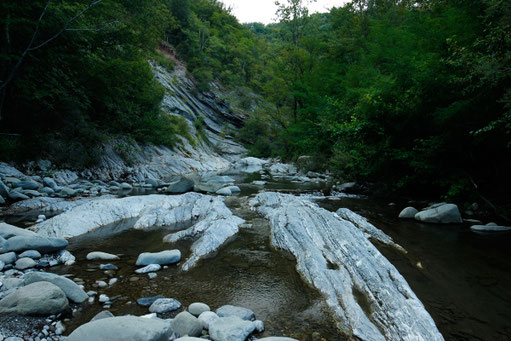
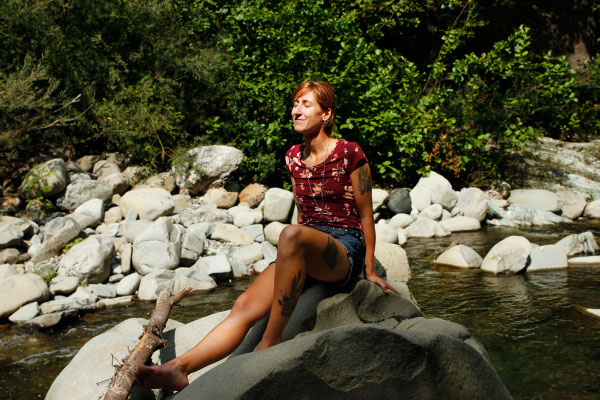
If Vesuvius is a too conventional destination for you, you can take a daring plunge into icy water and cut your feet on sharp rocks. Seems like hiking regular trails was not exciting enough for us—so we decided to go on a river hike. That’s means the trail is actually a riverbed. With water. No kidding.
The Stretti di Giaredo (“Giaredo Gorge”) is indeed more of an insider tip than a well-known major attraction. Starting point is the beautiful town of Pontremoli, where you can take a taxi from the train station to the trailhead—or hike three miles along a big road (so you’re already run over by honking, speeding cars before you even start).
From the trailhead, you walk and climb through the river for about half an hour until you reach the entrance to the gorge. That half-hour estimate assumes you’re wearing outdoor sandals or waterproof hiking boots. Since we didn’t have any of these available we walked barefoot and ended up taking a full hour and developing a few blisters and cuts. Still, it was a blast!

Now here’s the important part: from the moment the gorge begins, the water gets so deep that you’ll have no choice but to swim. And you should definitely not do that without a wetsuit because the water is just as cold as a penguin’s butt. If you find all this a bit too risky to do on your own, there are various guided tours available in the area. Unfortunately, we didn’t have the right gear with us and therefore had to settle for an exciting glimpse into the entrance of the gorge. Then we ventured a bit into the depths with water past our knees. All still barefoot, underprepared, but curious. Afterward, my hands were shaking so much from the cold that I dropped half my lunch into the river, but I’m sure some great white shark inside was having a great time. (I am joking, there are absolutely no sharks!)
On the way back, I not only had quite some blisters but also a sudden wave of arthritis. My ankles felt like a tank had run over them and my middle toe got stuck in gaps between rocks at least 27 times, which led to mild pain and a lot of cursing. But hell yes, it was still worth it! Next time we will bring the appropriate gear.
4. Amalfi Coast
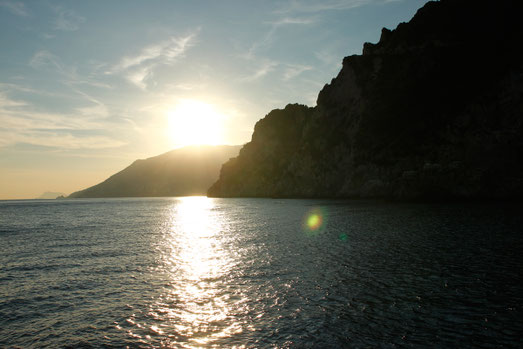
“I think you hit the ground!” the friendly young Italian yells through our open car window. I nearly faint, and my friend turns as pale as the sky just behind the sun. Somehow we’ve managed to get stuck on an almost vertical driveway with the bottom of our rental car. We are at the Amalfi Coast and these damn roads here are so narrow that you constantly have to swerve to avoid other mad drivers, cats, rocks, and trash cans. An older Italian yells something in Italian from the other side of our car. Then both Italians yell something that sounds like a fanatical soccer commentator. I can already see a slashed gas tank leaking and me yelling at an Italian insurance company.
Finally, the two decide not to kill each other, but to push our car back onto the road. So much for our arrival on the Amalfi Coast.
Whether you should really dare to come here in a rental car is up to you. I would advise against it, since not only are the roads tiny, but the villages are too, and there are hardly any parking spots. But if you want to wear down not just your undercarriage but your nerves as well—go ahead!
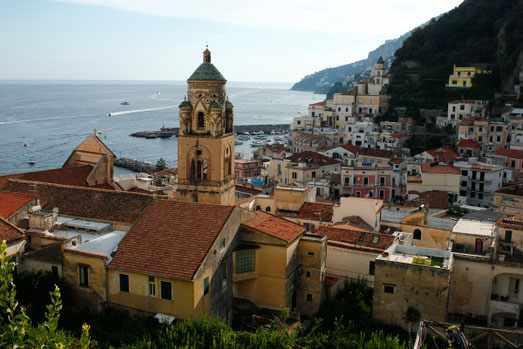
In the end, we decide to tuck the car away in a dark corner near our vacation rental and instead take the surprisingly affordable ferry to cruise along the coast. From the sea, you have a fantastic view of the cliffs, the colorful towns, harbors, and villas nestled in the rocks.
We speed along on the boat to the town of Amalfi and are captivated by this wonderful place. The narrow streets with their colorful facades remind us a bit of the Cinque Terre.
After disembarking and climbing a few snow-white steps, a fabulous view of the town, the shore and the sea spreads out in front of us.
There are plenty of beaches in addition to the towns along the Amalfi Coast.
But be warned—if you’re thinking of fine sandy shores, you’re out of luck. The small coves between the cliffs are full of rocks and gravel—heaven for adventurous beach scrambles, and everyone who loves rock pools, shells and little sea critters.
5. Capri

Now here comes Italy’s very own treasure island which is famous among ritzy people! To escape Naples’s morbid urban charm, we decide to spend our last day on our Italy trip on Capri, curious about its reputation but also about its fauna and flora. There is a passenger-only ferry leaving daily from Naples (there are also car ferries). We, in our early 20s, are sitting on the boat among 300 seniors with gold watches, expensive necklaces, hats and floral dresses, potentially lowering the average age from 105 to 63 and the average income from 2 million to chewing gum. The sea is a bit rough, and I’m reminded of my boat ride to the German island Helgoland many years ago, where I visited the boat's restrooms several times to check what exactly I’d had for breakfast.
Fortunately, we arrive without any major inside-out accidents. It’s incredibly crowded on the island, and we take a small bus that takes us up to the pedestrian zone of Capri. By the way, there are two villages on Capri: Capri and Anacapri. At first I read “Anti-Capri” and am confused. Is this the dark side of the moon?
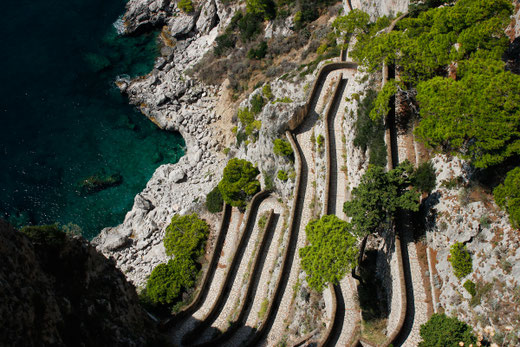
The city center is lined with expensive shops, and my jar drops into the gully when I see a simple wristwatch for 50,000 euros. We decide that we know what time it is even without such an investment and walk away to much quieter and even more picturesque alleys, and finally to the charming Giardini di Augusto (Gardens of Augustus). The small park isn’t ultra-spectacular but gives you a fantastic view of the completely crazy serpentine road Via Krupp and the Faraglioni—several rocks jutting out of the sea.
We walk along the clifftops and enjoy the purple flowers on the rocks, the deep-blue sea out there and the little sailboats bobbing on it like paper boats. Capri is definitely a place where you can lose yourself and let things go. Everything on this island looks like a single perfect instagram spot and also a bit unreal and staged. But this mix of huge pink-blooming hedges, snow-white terraces of expensive restaurants, and endless rocky cliffs is something you may want to experience at least once.
Now, several years later I am not 20 anymore (who would have thought!) and my life has taken a sharp turn to (northern) outdoor adventures, long-distance hiking, mountains and camping. If you like, you can follow my stories daily on Instagram: @squirrel.sarah.
Find more about my Italy trip and other nature spots in Europe here: