Wildlife Gardening for Beginners - Beeyond Excited.

July 11, 2026
“What on earth is this?!” I exclaim, holding up a leaf that’s speckled with green and white and completely fuzzy. I just can’t. 1600 ft² of garden, a green jungle—and I have absolutely no clue about anything; I only know daisies. And now I suddenly own all this.
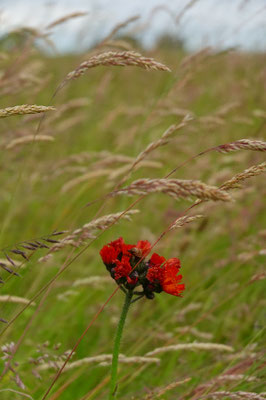
I want to run away; I pointlessly poke around in the rock garden with the rake and buy three flowers at the home improvement store because they’re such a beautiful red.
Two years ago, I inherited the house and garden from my nearly 100-year-old grandpa. The garden was always his sanctuary—and also the only thing he was still physically able to reach and tend to by the end. His vision for it: spotless, no weeds—what will the neighbors say? I planted this amazing exotic shrub from Japan! I stayed out of it, and now I’m right in the middle of it. Clueless, overwhelmed. Then all of a sudden I get messages from my best friend who lives 300 miles away from me in Hamburg…
She’s starting a wildlife nature garden. Native plants only because of insect decline, endangered hedgehogs, and climate change. Hmm…! Issues I strongly identify with, too. So what if my inherited garden isn’t some annoying, green jungle of exotic shrubs I’ve never heard of, but rather an opportunity? A chance to do something that not a single government in the world can actually get right: to do something for us people. For you and me and Aunt Lizzy next door. Not for billionaires, tycoons, and lobbyists. Be the change you want to see in this world—broken down to daisies. Suddenly, I’m really excited. I’m getting started. Right from the very beginning. A natural wildlife garden for beginners.
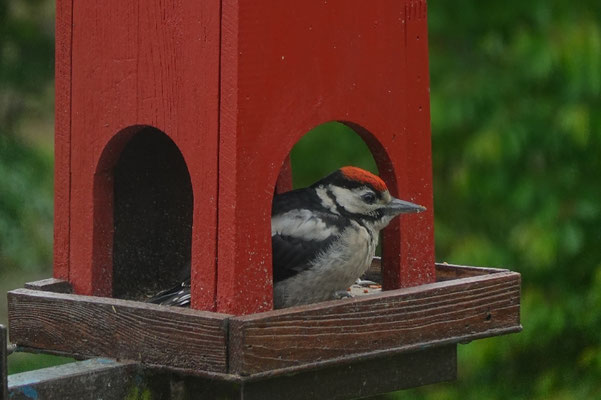
That was a year ago—and now I’m standing in front of a colorful, wild paradise teeming with life. We have baby woodpeckers, young white throated wagtails, sometimes twenty butterflies at once, wild bees, newts… a transformation—let yourself be inspired!
Starting a wildlife garden: it's all still there
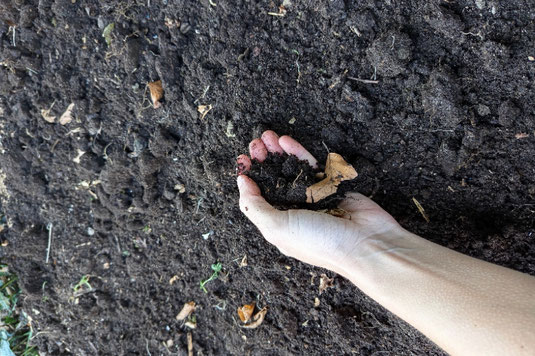
The lawn is dead. No rain for six weeks. Everything’s brown. It was about five years ago; my grandpa is in his mid-nineties, I’m in the U.S. with my husband, and my dad is sending me heartbreaking news from Germany. Back then, 80 percent of the garden was a short-cut lawn. It’s always been that way. I used to play soccer there with my grandparents when I was a kid. Back when hot, dry days were still a real event and not a common summer series of events. Back then, my grandparents had lots of flowers next to the lawn. Then my grandma died in 2013, and my grandpa kept getting older. “I just want to keep it simple and green,” he’d said several times (understandably), but he wouldn’t listen to any other ideas, advice or let anyone help him. The garden—his kingdom.
In the spring after his death, my husband and I stood before a thicket of ivy that had taken over every inch of space around the manicured lawn. A bit of cherry laurel, two Japanese trees sprouting wildly. And the old apple tree with fluffy moss on its gnarled branches. Out of sheer grief, desperation and cluelessness, we call a professional gardener. He trims the hedge, plants a few little flowers from the Near East, and sends a bill that’s as large as the grass hasn’t been in a long time. I don’t know much, but I know this: That sucks.
When my best friend first mentions a natural garden, I think she’s come up with another one of her eco-friendly ideas—like going sugar-free and stuff. Then I google it. Hmmm…! A natural garden is a garden that provides a habitat for plants and animals native to your country—by using regional materials and avoiding synthetic chemical fertilizers and pesticides. It actively promotes biodiversity and nature conservation, even if you only have a very small space available.
For a while now, I’ve felt paralyzed by world politics. War here, extremists there, hate, destruction, hunger, heat, death. And now here’s something I can do. Not somewhere in Iran or Berlin, where I can’t make a difference anyway, but right here, in my own neighborhood. Right where it counts. Awesome!
How and where to get started with a Wildlife Garden
I find a few free apps/websites to be a great way to get started with this topic (this isn’t an ad—it’s just my personal recommendation): Flora Incognita—which lets you quickly and fairly reliably identify a plant using a photo—and in Germany NaturaDB—where you can sort plants by location (shady/sunny), type (kitchen garden, natural garden, balcony…), flowering season, and “superpowers” (insect-friendly, privacy screen, edible, etc.). English alternatives could be Native Plant Finder or permapeople.org.
First, I take a quick look at all the plants in the garden. Even as a complete novice, I’ll then have a pretty good idea of what’s growing there and whether it’s native or an introduced species (a neophyte). It doesn’t take a degree in rocket science to realize that a German wild bee will find more food on a plant native to Germany than on a South American ornamental flower. We start by removing the neophytes. Then, depending on the location, I order native perennials—hardy, long-lived plants. I make sure above all that they can handle drought and heat, because those conditions will sadly be our future. I’m also taking all the pesticides in the garage to the recycling center.
The more I read up on it, the more it all makes sense. I’m starting to follow people on social media and YouTube who share tips for natural gardens—some of them are incredibly entertaining. I could name nativeHabitatProject, David Mizejewski or ellies_wellies_organic. No, you don’t have to have studied biology or spend hours reading books—a natural garden is something you live, something you grow into. It’s something I’m learning more about every month.
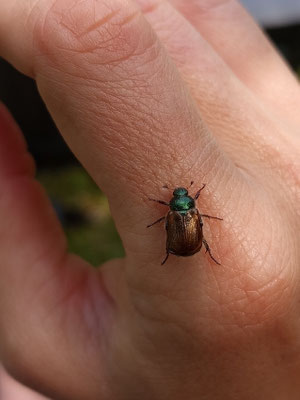
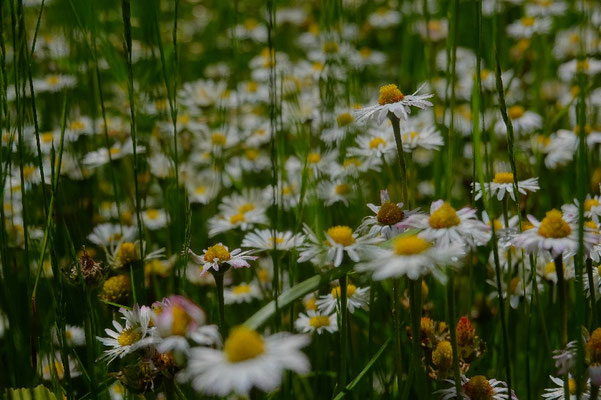
What the heck is "weed"?
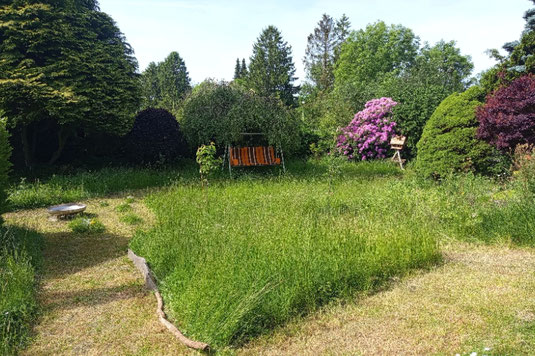
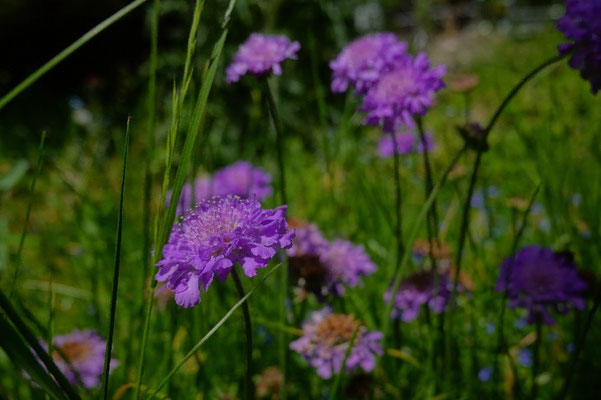
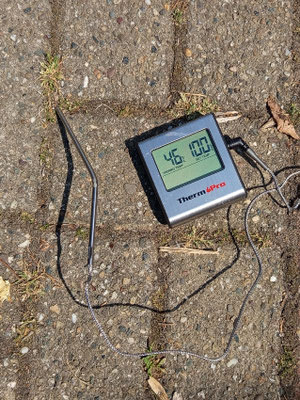
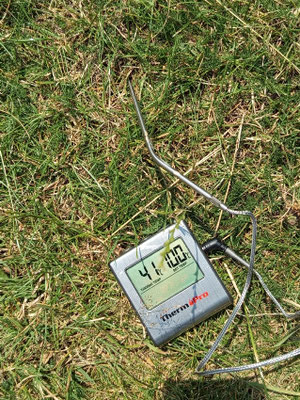
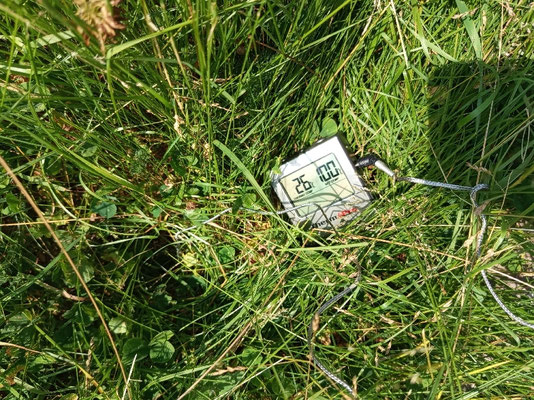
It’s been over a year now since I stood in front of that jungle of ivy-covered mess. The lawn has since become a no-mow-lawn, where I only use the mower to trim a few narrow paths. When temperatures in Germany reach up to 105°F for an entire week, I measure 115°F (46°C) degrees on the ground in my paved driveway, 107°F (42°C) on the mowed paths, and 78°F (26°C) in the no-mow meadow, which stands 12 inches tall—see photos below.
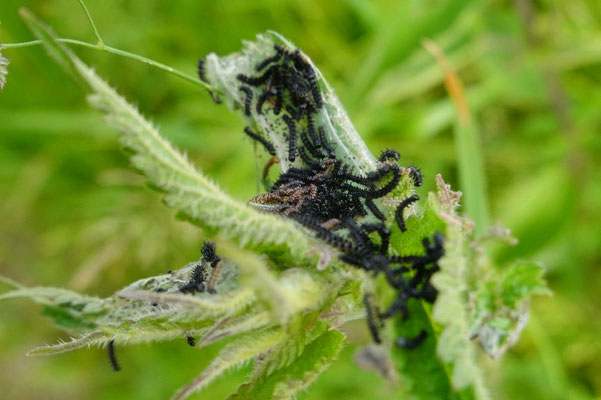
Other native plants have established themselves as if by magic, alongside the perennials I’ve planted. Stinging nettles, on which the larvae of the peacock butterfly feed;
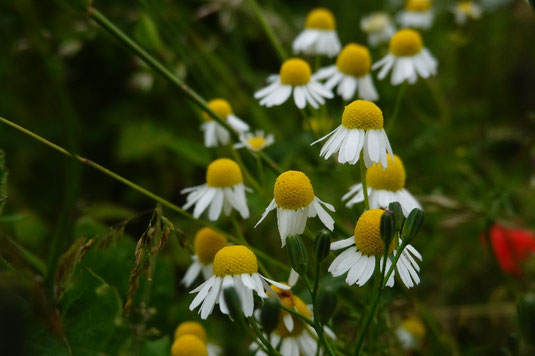
thistles, which attract rare wild bees; dandelions, which are getting a bit out of hand—which is why I make a delicious salad out of the leaves; hawkweed, chamomile,… Plants that
were kept out of this garden for years with chemicals and heavy pruning, but would actually thrive here if we humans didn’t kill everything off or cover the place with those dreadful gravel
gardens (which, by the way, act like an oven outside your living room window in the summer—yolo).
Plants that are not only almost all edible and infinitely healthier than any overbred iceberg lettuce at Walmart, but also have medicinal properties that we’ve long since forgotten amid Ibuprofen and genetically modified, AI-generated junk. How mind-numbingly stupid is it that we’ve largely labeled our native plants—which are incredibly necessary and useful—as “weeds,” just so we can prove to our neighbor, with a Japanese ornamental plant in our gravel garden, that we’re even more tidy and exotic than he is?! How could we have completely thrown away all the knowledge that our grandparents possessed as a matter of course in just one and a half generations? Are we really that stupid, or are we just pretending to be?
Maybe we aren’t stupid—we’ve just become unaware and clueless. As clueless as I once was when I stood in front of my garden, where today I know every plant and every bird. Not because I crammed my head full of knowledge like I did in school, but because I opened myself up to something I didn’t know yet. Because curiosity just came naturally all of a sudden. That first sense of accomplishment, when a cricket chirped in the tall grass where everything else was silent before.
Did I make mistakes? Absolutely. One plant withered in the wrong spot; another started to overgrow everything. What do we learn from this? That we can learn. That nothing has to be perfect, but that doing nothing is always the worst decision of all.
Maybe this post is a starting point for you, too—as a beginner in natural gardening.
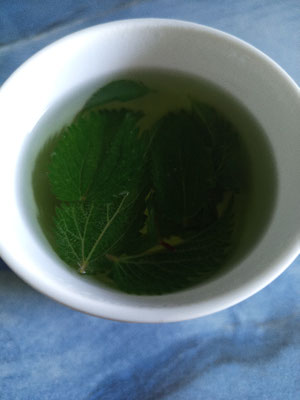
P.S.: That green-and-white-spotted, fuzzy leaf belonged to lungwort, a plant which can help with respiratory issues when brewed as tea (though this hasn’t been conclusively proven clinically).
If you’d like, you can follow my stories and outdoor adventures daily on Instagram: @squirrel.sarah.
Find more inspiration about nature and life here: